Wedding Dance Floor Ideas to Keep Guests Moving
Key Points
The wedding dance floor (also called the reception dance area or dancing space) is the physical and social centerpiece of the reception. The dance floor is either full by the third song or it never gets full. Every decision in this post is about those first three songs.
- The wedding dance floor is the most important square footage at any reception.
- Lighting, layout, and music pacing determine how full the floor gets and stays.
- Small floors feel packed faster than big ones. Sometimes less space is more.
- A host or atmosphere person working the crowd keeps energy high during dips.
- Guests follow the bridal party’s lead. Get them onto the floor early.
Why the Dance Floor Makes or Breaks a Wedding
If the dance floor is full, the wedding was great. If it’s empty, the wedding was fine. that’s the blunt truth. Guests remember energy over aesthetics. Nobody says “I can’t believe how beautiful the flowers were” when the dance floor was dead. They say “did you see how crazy the dance floor got?” when it was alive. For playlist selection that pairs with this, see The Knot’s dance floor songs list.
Almost every decision in wedding planning should route through the question: does this help or hurt the dance floor? If it hurts, rethink it. If it helps, invest in it.
Dance Floor vs. Band Stage: Not the Same
The dance floor is for guests. The band stage (or DJ booth area) is for the performers. These should be adjacent but distinct. A common setup mistake is letting the stage eat into the dance floor space, leaving guests with too little room to move. A good rule: the dance floor should be at least twice the size of the performance area. If your DJ doesn’t need a stage at all, reclaim that square footage for dancing.
Dance Floor Size Matters
The biggest dance floor mistake is making it too big. A cavernous floor with 30 people on it feels empty. The same 30 people on a smaller floor look like a packed party.
Rule of thumb: plan for about 30 to 40 percent of your guests to be on the floor at peak. So for 150 guests, the floor needs to comfortably fit 50. In square footage, that’s roughly 200 square feet (a 15-by-15 floor).
If your venue has a massive floor, don’t worry. Add tables and chairs closer to the edges. Reduce the visible floor space.
Lighting
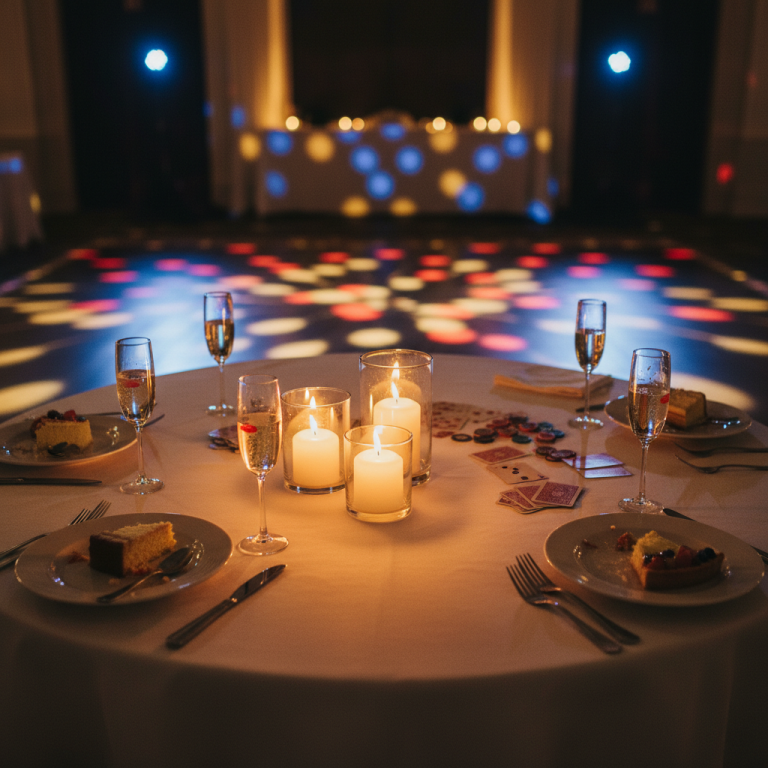
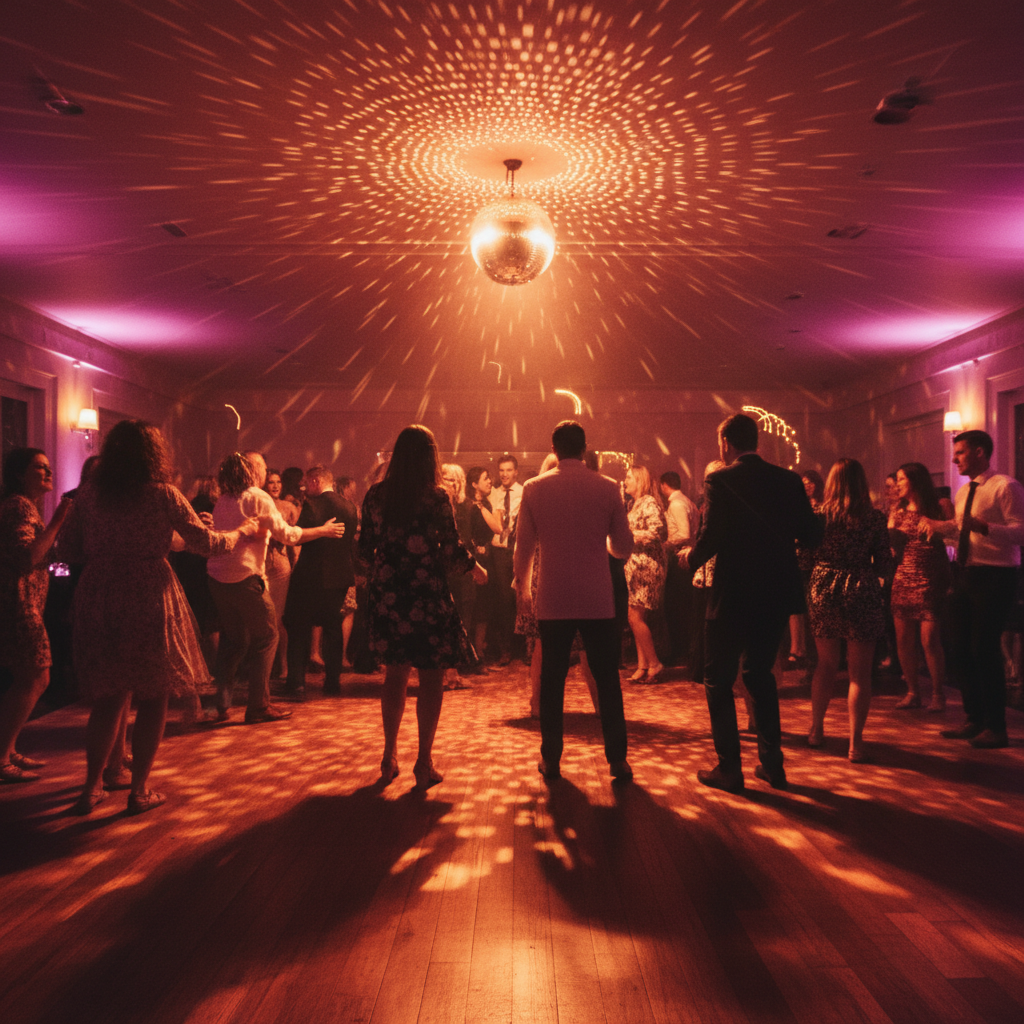
Lighting transforms a dance floor. Bright overhead lights kill energy. Dim amber wash lighting makes the floor feel like a club.
- Turn off the house lights. Overhead white lights are a dance floor killer.
- Add colored uplighting. Amber, magenta, or warm red wash lights on the walls.
- String lights above the floor. Bistro lights create warmth.
- Disco ball. The most underrated wedding accessory. Adds instant energy.
- Moving lights are optional. Subtle is better than aggressive.
Layout
The floor should feel like the center of gravity. Tables should gradually lead to it.
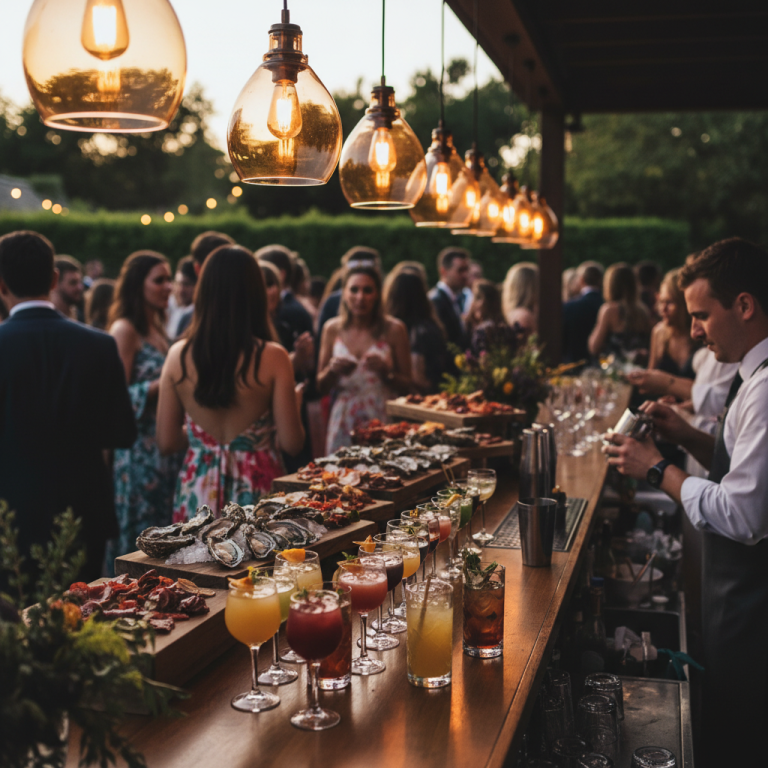
- Place the bar near the floor. Guests returning from the bar are more likely to drift onto the floor.
- Keep tables close but not crowded. Guests should see the dancing space from their seats.
- Put the cake or dessert table on the opposite side of the room. Creates natural guest movement.
- Keep the DJ near the floor. The DJ’s presence anchors the energy.
- Leave the entrance to the floor open. No table or bar blocking the approach.
Dance Floor Moments to Build In
The floor doesn’t need to be full for three straight hours. You want peaks and valleys. Planned dance floor moments help.
The Opener
A high-energy song immediately after the first dance. Pulls everyone up.
The Mid-Reset
A slow song about 30 minutes in. Couples come on, sway-dancers return. Resets the room.
The Throwback Block
A 10-minute block of nostalgic hits (80s/90s depending on crowd). Brings older guests and elder millennials to the floor.
The Line Dance
One mid-reception line dance. Cupid Shuffle or Wobble. Gives everyone permission to be on the floor.
The Peak
Around 10:30pm. The biggest songs of the night, back-to-back. Save your top tracks for this window.
The Closer
A universal sing-along. Don’t Stop Believin’ works. Close with energy, not a fade-out.
The Atmosphere Person
This is our bread and butter. A dedicated person whose only job is to keep the floor full. They pull wallflowers in, keep the bride from getting stuck in conversation corners, engage the parents, and read the room’s energy.
A great atmosphere person adds 30 percent more time on the dance floor per guest. they’re the difference between a polite wedding and a legendary one.
Most weddings don’t hire this role. The ones that do can feel the difference immediately. This is literally what Wedding Wingmen does. it’s why we exist.
What Kills a Dance Floor
- Bad DJ song selection. One wrong song can empty the reception dance area in 30 seconds.
- Too-bright house lights. Kills the club feel.
- An empty floor at the start. Floors take momentum to fill. If the first 10 minutes are empty, recovery is hard.
- Long speeches during dance time. Speeches belong before the dance block. don’t break them up.
- Scheduled activities during dance block. No photo booth announcement, no game, no surprise.
- Running out of drinks. Dry floors are slow floors.
For music strategy specifically, see our guide on wedding dance floor songs and how to build the playlist.
Tactical Moves That Keep the Floor Full
- Get the bridal party onto the floor first. Guests follow their lead.
- Have the MC invite specific tables up. “Tables 3 and 5, come on up.”
- don’t play more than one slow song in a row. Two in a row and the floor empties.
- Keep the energy climbing. Each song should be equal to or bigger than the one before it, until the peak.
- Close with the biggest sing-along you’ve. Leave them wanting more.
For more on the role of the MC and atmosphere host, see our piece on what a wedding MC is and whether you need one.
FAQs
How big should a wedding dance floor be?
A wedding dance floor should be roughly 4 to 5 square feet per expected dancer. For 150 guests, plan for 50 on the floor at peak, so a 200 to 250 square foot floor. Too big looks empty. Too small feels cramped. Err on the smaller side.
Do we need uplighting for the dance floor?
You need some form of ambient lighting for the dance floor. Uplighting is the easiest and most effective. Warm amber or colored LEDs on the walls transform the room’s energy. Skip uplighting and your reception will feel like a cafeteria.
What’s the single best way to keep the dance floor full?
The single best way to keep the dance floor full is to hire a dedicated atmosphere person or dance host. that’s what we do. Their entire job is keeping the floor energized. No single vendor has more impact on the dance floor than this.
When should we do bouquet toss and garter toss?
You should do bouquet toss and garter toss during the dance block, around 9:30 to 10pm, not during the dance peak. Doing them during the peak breaks the floor’s energy. Doing them too early and the crowd is not warm yet. Aim for the middle of the dance block. For more dance floor and atmosphere ideas, see Brides’ wedding reception ideas hub.
Is the dance floor the same as the band stage?
No. The dance floor is the area designated for guests to dance. The band stage (or DJ setup area) is for the performers. These should be adjacent but not merged. Letting the performance area eat into the dance floor is a layout mistake that makes the dancing space feel smaller than it is and can make guests feel like spectators rather than participants.