Outdoor Wedding Reception Ideas for a SoCal Wedding
Key Points to Review
An outdoor wedding reception (also called an al fresco wedding, open-air celebration, or garden reception) is a reception held outside or in a partially open structure. Outdoor settings create atmosphere through texture, light, and the natural environment. Plan for every variable the indoors removes.
- An outdoor reception is an atmosphere multiplier when the logistics are right, and a stress-fest when they’re wrong.
- Plan for three SoCal-specific realities: wind, temperature drop after sunset, and bug management.
- Lighting and heaters aren’t optional. String lights overhead and patio heaters after 9pm save the reception.
- Dance floor placement matters more outdoors. Pick a flat, protected spot and lay a proper floor over grass or gravel.
- Food and bar logistics differ outdoors. More passed apps, more water stations, and caterers who have done tented events before. Our reception decoration guide covers the indoor-decor side of the same question.
Southern California has the best outdoor reception weather in the country for most of the year, and that’s a real advantage. For more outdoor reception format ideas, The Knot has an outdoor wedding reception guide. It’s also the reason most outdoor reception problems are planning problems, not weather problems. Here’s what separates the outdoor receptions that feel magical from the ones that feel like everyone is quietly suffering.
Outdoor Reception vs. Garden Wedding vs. Destination Wedding
An outdoor wedding reception is any reception held outside, regardless of formality or location. A garden wedding is a specific subset: an outdoor reception in a garden setting, usually more intimate and floral-focused. A destination wedding involves travel to a specific location as the draw. You can have an outdoor reception without it being either a garden wedding or a destination wedding. In SoCal, “outdoor reception” usually means a vineyard, estate, rooftop, or coastal venue with open-air dining and a proper dance floor setup, which is a distinct category from a garden ceremony or a beach elopement.
The Three SoCal Conditions Every Outdoor Reception Has to Plan For
Even on a perfect weather weekend in Malibu, Santa Barbara, Temecula, or San Diego, three conditions will affect the reception. Plan for all three.
Wind
Coastal venues get wind after 4pm almost every day. Inland venues get it less consistently but still need a plan. Light centerpieces will blow over. Paper menus will launch. Candles in open glass will die. Fixes: weighted candle hurricanes, taller glass cylinders around tapers, heavy stone or wood place card holders, menu cards clipped or slid under plates.
Temperature Drop
SoCal sunset is beautiful. The thirty minutes after sunset is always ten to fifteen degrees colder than guests expect. By 10pm in coastal venues, the temperature can drop to the high 50s. Fix: rent patio heaters (tower style for outdoor, mushroom style under tents). One heater covers roughly 100 square feet. don’t skimp. Cold guests leave early.
Bugs
Garden venues, vineyards, and any venue with water feature will have mosquitoes from dusk onward. Fix: citronella candles placed on the perimeter, a bug-repelling diffuser system (some venues rent these), and small bottles of bug spray in the welcome bag or bathroom.
Tent vs No Tent
The single biggest outdoor reception decision is whether to tent or go fully open-air. Both work. Pick the right one.
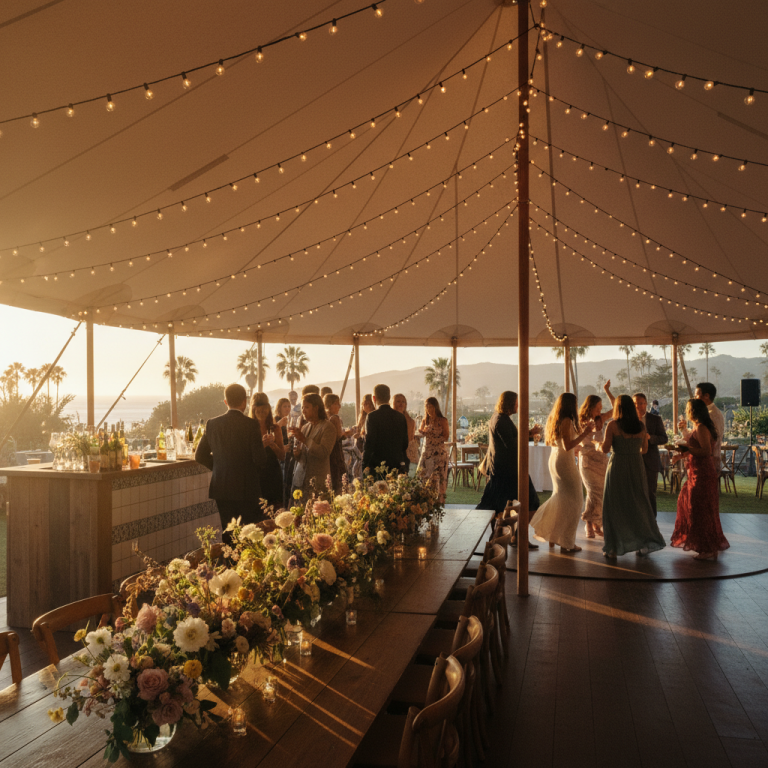
Tented reception: Required if the venue doesn’t have a permanent structure and the weather is uncertain. Also required if the guest count is over about 120 and the venue doesn’t have a built-in dining area. A tent reads as a wedding structure, not a compromise. Clear-top tents (sailcloth or sperry) look elevated; traditional white pole tents look dated.
Open-air reception: Works for SoCal spring through fall at most inland venues. Also works at coastal venues with a permanent patio or hardscape. Cheaper, feels more intimate, and the sky itself becomes the ceiling. Requires a Plan B for weather.
Lighting Is Not Optional Outdoors
An outdoor reception without intentional lighting is a dark reception. The natural light is gone by 7:30pm in summer and 5pm in winter. The lighting stack below is what turns an outdoor venue into an evening atmosphere.
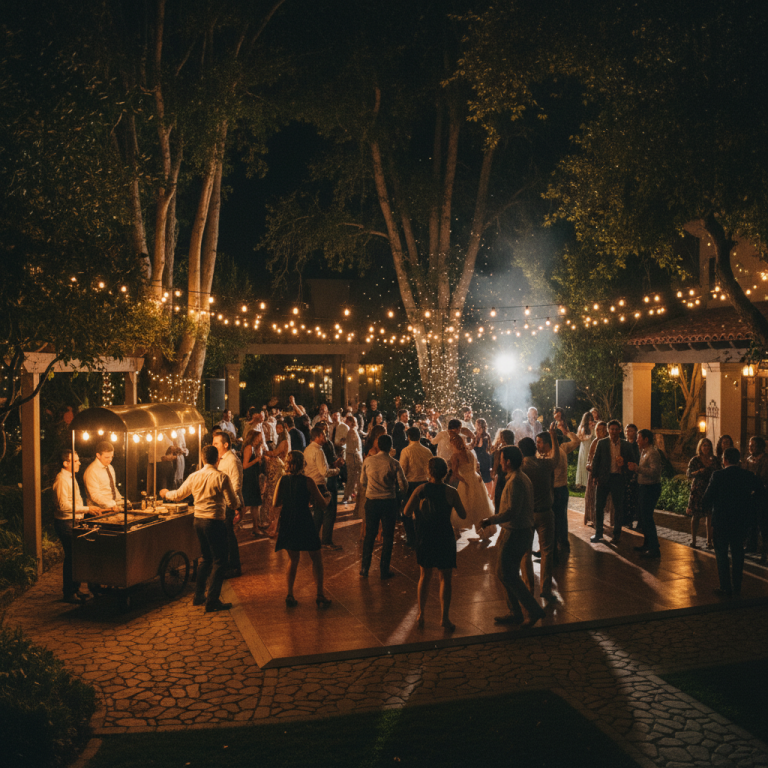
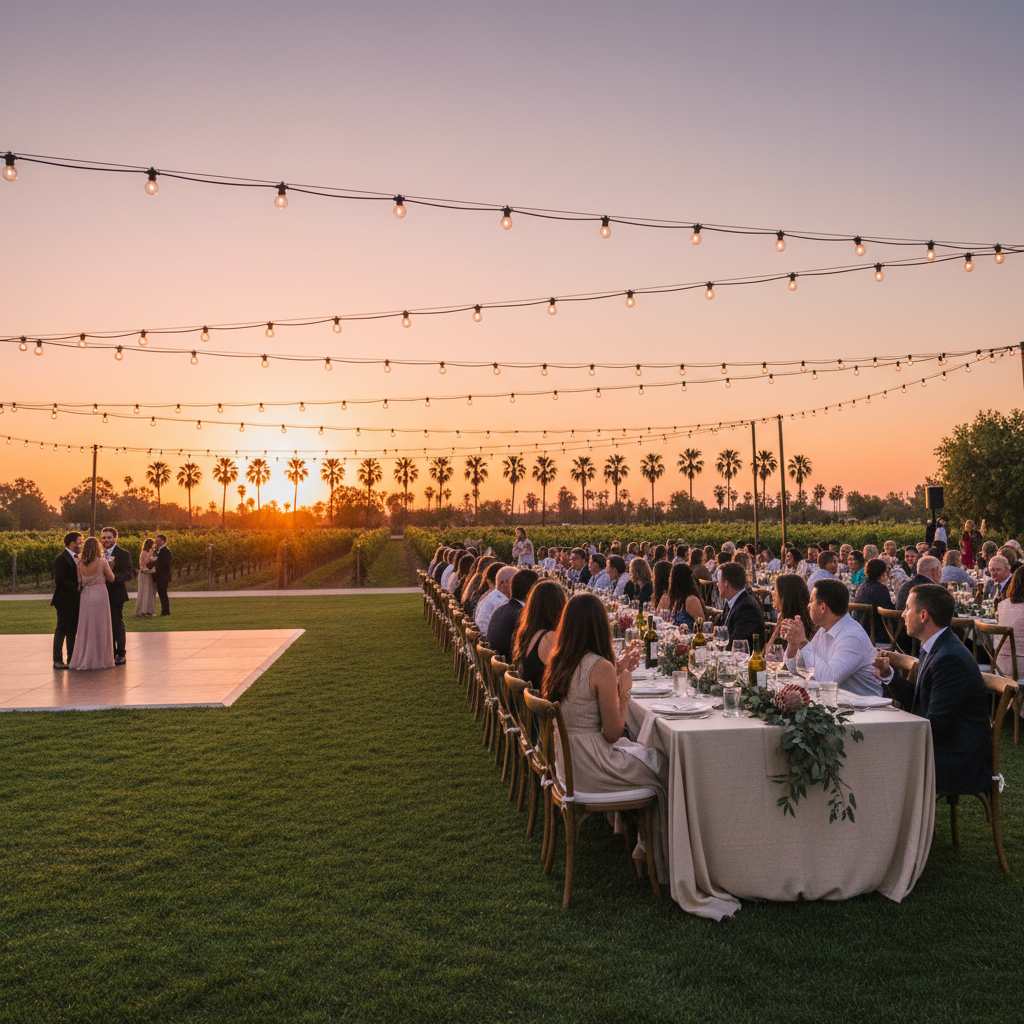
Market lights or string lights overhead. The base layer. String lights on bistro poles over the dance floor and dining area. Minimum spec: warm white Edison-style bulbs on a catenary wire system. Rent from the venue or a lighting vendor, not DIY from Amazon string lights.
Uplights around trees or along perimeter. Amber or warm white uplights on trees, walls, or architectural features. Adds depth.
Pathway lighting. Lanterns or low path lights along walkways and between ceremony and reception. Practical and cinematic.
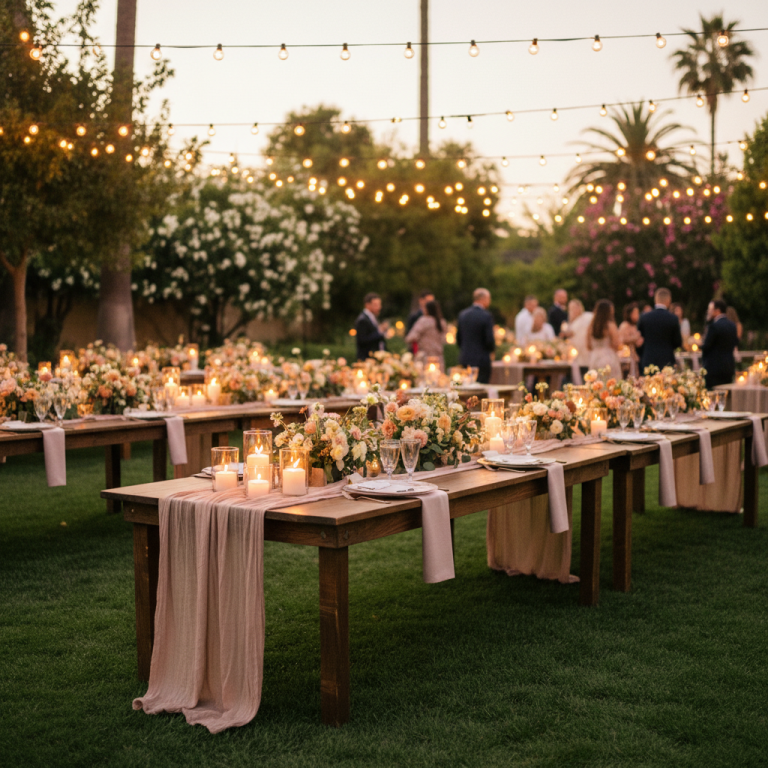
Candles on every table. Wind-protected in glass hurricanes or taller cylinders. Warm, flickering, eye-level.
Dance floor pin-spots. Focused overhead lights on the dance floor so guests know where to move and the energy stays there.
Dance Floor Placement and Surface
Outdoor dance floor mistakes cost more than indoor ones. A dance floor on grass is a dance floor that doesn’t get used. Invest in a proper surface.
Lay a real dance floor. Vinyl snap-together flooring, subfloor-leveled. Rental companies do this. About $4 to $7 per square foot.
Size: one square foot per guest. A 150 person wedding needs a 150 square foot dance floor. Oversizing is wasted space. Undersizing kills the crowd. More layout tips in our dance floor ideas guide.
Place it close to the bar and tables. Not across the venue. Guests won’t travel across a vineyard to dance.
Flat ground only. Sloped ground plus a rented dance floor plus heels equals twisted ankles. Scout this in advance.
Food and Bar Logistics
Outdoor food service has more failure modes than indoor. Plan for them.
Cocktail hour. Double the passed apps you’d plan for indoors. Guests cluster and snack more outdoors. Drink service should include a water station at every bar (mandatory in SoCal heat).
Plated vs family style vs buffet. Plated works tented. Family style works outdoors with heavy sauces (salads and cold plates travel worse outdoors). Buffet works but needs tented coverage so food doesn’t get wind-blown.
Late-night food. A mobile food cart works perfectly outdoors. Taco cart, pizza oven on wheels, donut cart. The cart itself becomes atmospheric.
Water stations everywhere. Large dispensers with fruit-infused water at the bar, near the dance floor, and at the entrance. SoCal sun and alcohol together dehydrate guests fast. Not optional.
Ceremony to Reception Transition
Outdoor weddings often do ceremony and reception in the same venue. That transition is where pacing dies. Plan it.
Hire a band or DJ to play during the transition. Music covers the awkward thirty minutes while guests wait for the space to flip. Share a tight MC script with the band or DJ so the hand-offs land.
Move cocktail hour to a different area than the reception. Separate spaces make the reveal feel intentional.
Coordinator or MC announces the reception flip. don’t assume guests know when to sit down. Someone has to make the call.
Weather Backup Plans
A real weather plan is not “we’ll move it inside.” A real weather plan is a tented backup on hold, a revised floor plan for the indoor option, and a decision deadline (usually 7 days out) for whether to pull the trigger.
For winter SoCal weddings: tented is default. For spring and fall: tented on hold, open-air default. For summer: open-air is almost always fine, heaters still required after sunset.
Venue-Specific Outdoor Setups
SoCal outdoor venues split into a few categories, each with different setup needs.
Vineyards (Temecula, Santa Ynez). Long farm tables, market lights strung between posts, dance floor on a hardscape patio. Wildflowers and eucalyptus match the setting.
Coastal venues (Malibu, Laguna, Dana Point). Tent almost always required due to wind. Heaters mandatory after 9pm. Avoid overly nautical decor; the view does the work.
Garden venues (Pasadena, Altadena, Ojai). Open-air works. Hang lights in existing trees. Light florals to let the garden be the backdrop.
Rooftop and urban venues (DTLA, Santa Monica). Wind is the biggest factor. Skyline is the decor. Warm ambient lighting and low centerpieces keep the focus on the view.
Desert venues (Joshua Tree, Palm Springs). Major temperature swings. Heaters after sunset, cooling stations during the day. Dust is the silent decor killer, so avoid open satin linens and rely on stone and wood textures.
FAQs
Is an outdoor wedding reception a good idea in SoCal?
An outdoor wedding reception is a great idea in SoCal for most of the year, specifically March through November. The weather is reliable, the natural light is cinematic, and venues are abundant. The catch is logistics. Outdoor receptions require heaters, real lighting, a proper dance floor surface, and a weather contingency. Done right, an outdoor SoCal reception beats any indoor equivalent. Done without planning, it becomes a guest-cold, wind-chaos situation.
What time should an outdoor reception end?
An outdoor wedding reception should end by 10pm or 11pm at most SoCal venues. Many residential-area venues have noise ordinances that require amplified music to end at 10pm. Coastal and inland vineyard venues often allow until 11pm. After 11pm, temperature drops sharply, guests leave in waves, and the reception winds down naturally. Plan the send-off for the noise cutoff, not after it.
How do I keep guests warm at an outdoor reception?
Keep guests warm at an outdoor reception by renting patio heaters (one per 100 square feet), placing blanket baskets near the dance floor and seating areas, serving warm after-dinner drinks (hot toddies, spiked hot chocolate, espresso martinis), and building a fire pit if the venue allows. Heaters are the most important of these. Cold guests leave two hours earlier than warm ones.
Do outdoor wedding receptions need a tent?
Outdoor wedding receptions need a tent in three situations: winter or unreliable weather months, guest counts over 120 at venues without existing structures, and coastal venues with strong wind. Otherwise, open-air works for most SoCal spring, summer, and fall weddings. A tent on hold with a 7-day decision deadline is the best compromise when the season is uncertain.
What are common outdoor wedding reception mistakes?
Common outdoor wedding reception mistakes: no lighting plan, no heaters, a dance floor laid on uneven grass, cocktail hour in the same location as ceremony without a transition, underestimating bugs at garden or waterside venues, and not building a real weather backup. The fix for almost all of them is hiring vendors who have done outdoor SoCal receptions before, and budgeting properly for tent, lighting, and heaters as non-negotiable line items. For more outdoor wedding ideas, see The Knot’s outdoor wedding reception guide.
Is an outdoor wedding reception the same as a garden wedding or al fresco wedding?
Not exactly. A garden wedding is a specific style of outdoor reception held in a garden setting, usually more intimate and floral-heavy. An al fresco wedding is simply any wedding or reception held outdoors (the term is borrowed from Italian and means “in the open air”). An outdoor wedding reception is the broadest term and covers vineyard, coastal, rooftop, estate, and garden settings alike. In SoCal, most couples use “outdoor reception” to mean a venue with open-air dining, a dance floor setup, and a natural backdrop.